
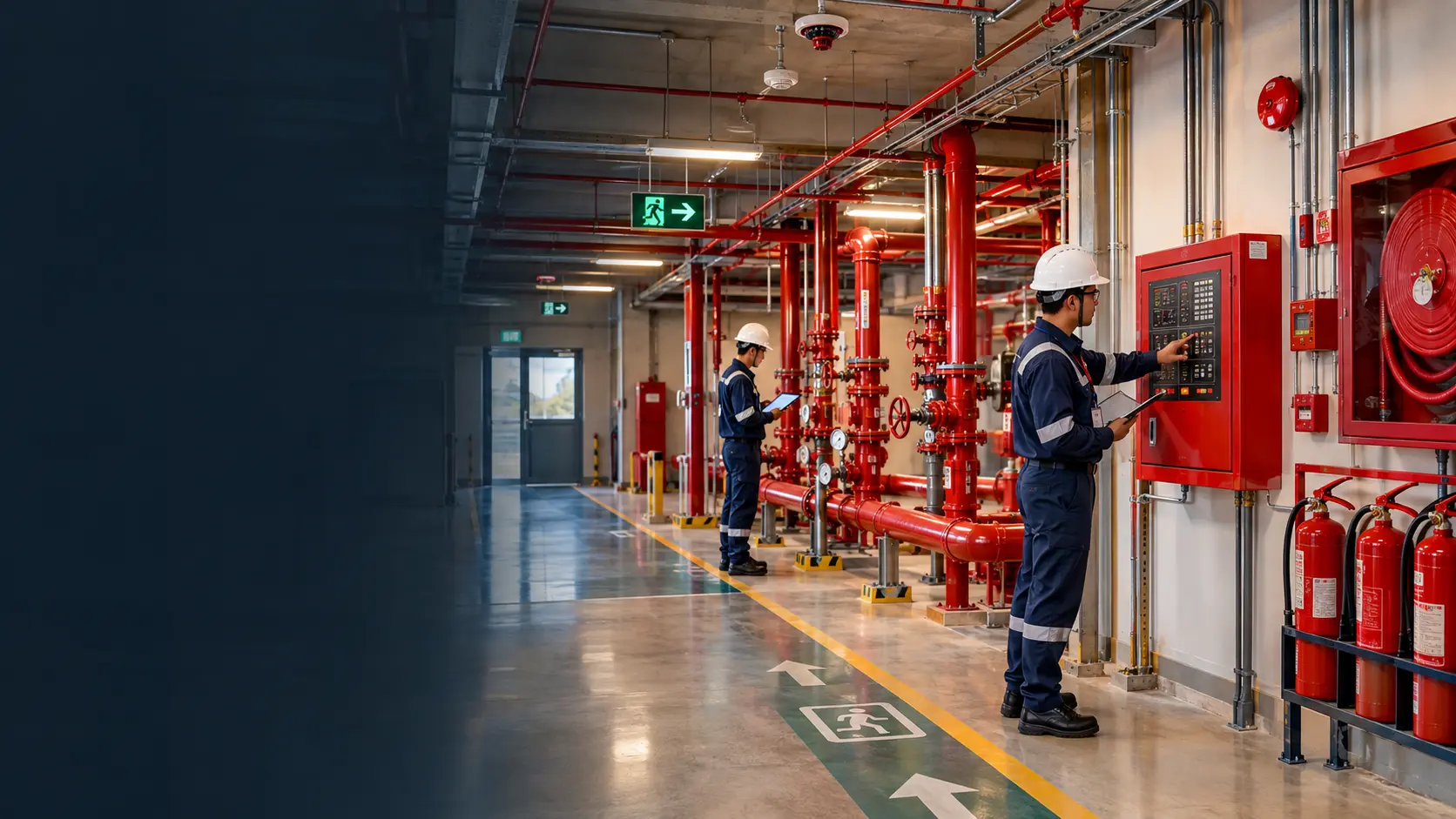
Fire Detection Systems
Assessment of smoke detectors, heat sensors and alarm systems against applicable detection requirements, including NFPA 72.
A systematic assessment of fire protection systems, building infrastructure and operational procedures to identify risks and strengthen compliance.
A Fire Safety Audit is a structured evaluation of a facility’s fire protection systems, building infrastructure and operating procedures. It identifies gaps that could increase the likelihood or impact of a fire incident.
Agni Suraksha reviews detection, suppression, evacuation and management controls against the requirements relevant to your site—including NBC, BIS, NFPA and state fire-safety regulations—to help protect people, assets and continuity of operations.
A practical review of the systems and controls that determine fire readiness.
Assessment of smoke detectors, heat sensors and alarm systems against applicable detection requirements, including NFPA 72.
Evaluation of extinguishers, hydrants, sprinklers and pumps, with reference to applicable standards such as NFPA 10 and NFPA 13.
Verification of exit routes, signage, emergency lighting and evacuation preparedness with reference to life-safety requirements.
Review of fire separation, fire load, electrical installations and other building conditions that can influence fire risk.
Verification of compliance records, maintenance logs, inspection schedules, permits and emergency procedures.
Clear findings, a compliance matrix and prioritised corrective-action recommendations for practical implementation.
Applicable fire-safety requirements are assessed based on the facility, occupancy, operations and site-specific legal context.
The audit process examines fire hazards, their likely consequences and the urgency of corrective action required.
Risk review is typically prioritised by severity, likelihood and the speed at which actions need to be implemented.
Corrective actions are prioritised by the assessed level of risk.
| Level | Indicative range | Action | Timeline |
|---|---|---|---|
| Critical | 100–125 | Immediate action; stop operations if necessary | 24–48 hours |
| High | 50–99 | Priority action and mitigation plan | 7–14 days |
| Medium | 20–49 | Planned corrective measures | 30–60 days |
| Low | 1–19 | Monitor through routine maintenance | 90+ days |
We understand your facility, operations and relevant compliance obligations before agreeing the audit scope.
Our team reviews fire-protection equipment, infrastructure, documents and operational arrangements on site.
Findings are assessed against applicable requirements and classified by risk so action can be prioritised.
You receive an executive summary, findings, compliance matrix, risk assessment and practical recommendations.
Our assessment approach is built around site-specific observations, clear risk prioritisation and recommendations that can be implemented in stages.
Talk to Agni Suraksha about your facility, fire-safety responsibilities and the audit scope best suited to your operations.