
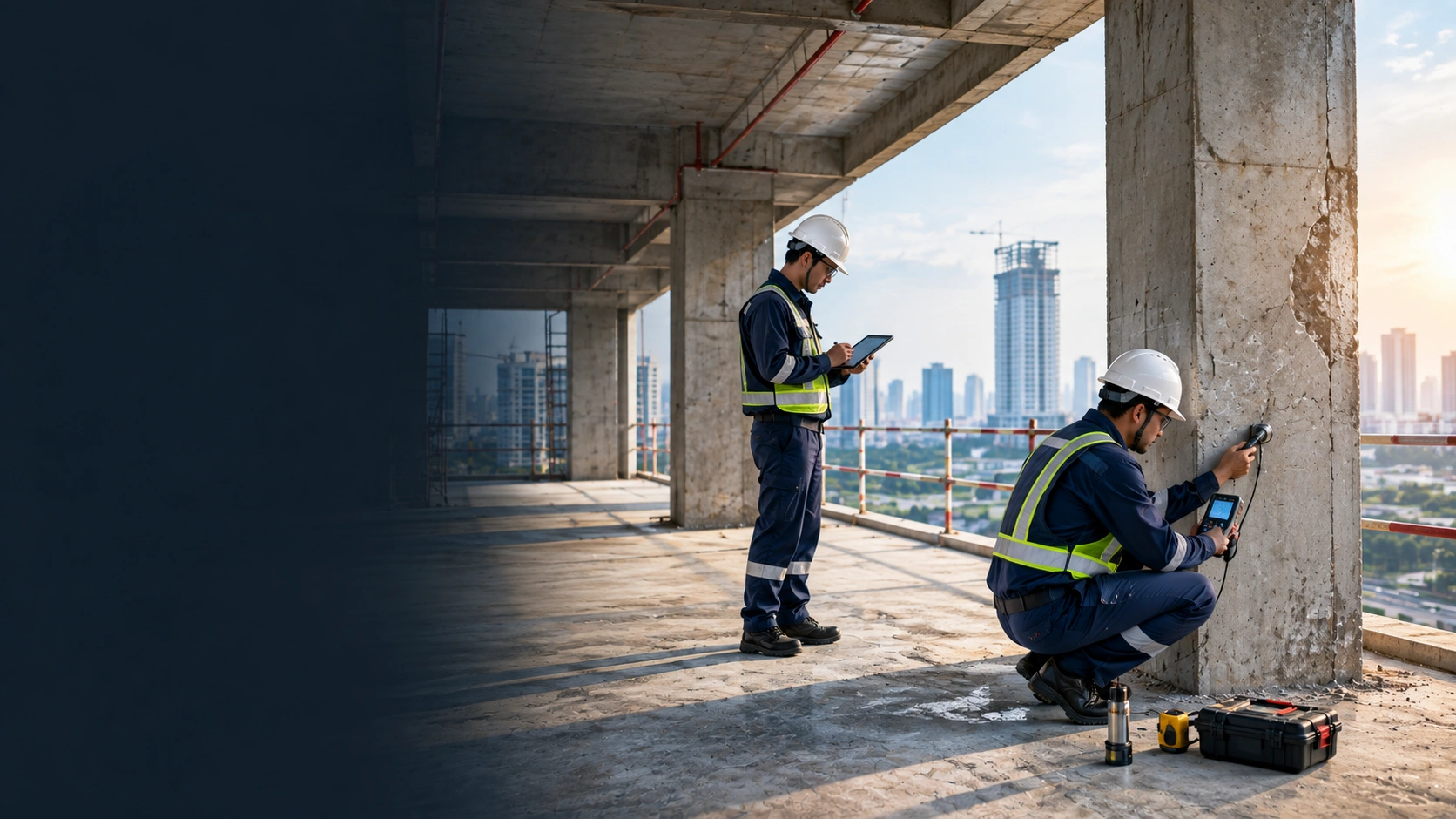
Structural Elements
Detailed inspection of beams, columns, slabs, foundations, connections and other load-bearing elements.
Comprehensive structural inspections to assess building condition, stability and safety, with clear recommendations for remedial action.
A Structural Safety Audit is a detailed technical evaluation of a building’s stability, strength, durability and fitness for occupancy. It helps identify concerns such as cracking, corrosion, settlement, material deterioration and load-related distress before they compromise structural integrity.
Agni Suraksha combines site inspection, suitable non-destructive testing and structural analysis to provide clear findings and practical recommendations. Assessments are aligned with applicable standards, including IS 456 and IS 1893, together with relevant local building regulations.
From visible distress to material condition and load performance, the audit is tailored to your facility.
Detailed inspection of beams, columns, slabs, foundations, connections and other load-bearing elements.
Identification of cracks, corrosion, settlement, deformation, water damage and other visible signs of distress.
Review of load-carrying capacity and structural performance under dead, live, wind and seismic loads.
Appropriate non-destructive testing may include rebound hammer, ultrasonic pulse velocity and ground-penetrating radar.
Assessment against applicable standards, local building regulations and project-specific requirements.
Prioritised, site-appropriate recommendations for repairs, strengthening, retrofitting and ongoing maintenance.
The precise scope depends on the type, condition and intended use of the structure. A typical engagement may include:
Structural assessments are generally carried out with reference to the standards and regulations applicable to the project.
We define the assessment scope and review the drawings, past repair records and information available for the building.
Our engineers inspect the structure and document areas of concern, including external and relevant internal building elements.
Where needed, we use appropriate NDT and analysis methods to evaluate material condition and structural behaviour.
You receive findings, risk priorities and practical remedial measures to help plan repairs, retrofitting or maintenance.
We provide a fixed-fee proposal once we understand the structure and inspection requirements.
Share your building details, location and concerns, and Agni Suraksha will recommend an appropriate audit scope.
+91 96195 71007Talk to Agni Suraksha about your building, infrastructure and structural safety requirements.